Rafael Cuesta Sánchez’s false identity papers
Los pacientes del doctor GarcíaRafael Cuesta Sánchez’s false identity papers are a forged administrative identity that first enables Manuel Arroyo Benítez to move through Madrid during the Spanish Civil War, then becomes Guillermo García Medina’s means of surviving the change of regime. Their importance lies in the precision of the fiction: official-looking documents make a person legible to the state, while the invented life they record conceals who he is.
Creation and First Use
On 28 June 1937, Manuel registered at a Madrid hotel with papers issued through the Republican Directorate-General of Security. They identified him as Rafael Cuesta Sánchez, a civil servant in the Ministry of the Interior, born in Talavera de la Reina on 12 January 1904, a member of the UGT since 1929, married, and resident in Valencia. None of those biographical details was true. The identity was not a loose disguise but a complete administrative persona, furnished with a name, birthplace, political affiliation, occupation, marital status, and address.
The appointment that helped support the identity was itself exceptional: Rafael Cuesta Sánchez had been named an assistant government delegate before the Madrid Defense Council, an ill-defined post that had not existed before his appointment and would not exist afterward. The appointment had appeared in the official bulletin on 21 June, while Manuel was still in London preparing to leave. His return came amid the consequences of the Barcelona May Days, whose six days of fighting left more than two hundred antifascist dead and contributed to the fall of Largo Caballero and the rise of Juan Negrín. Against that unsettled political background, the false papers gave Manuel a usable place inside the Republic’s own official machinery.
Transfer to Guillermo
Later, Manuel gave Guillermo García Medina a sealed white envelope containing a new identity card in Rafael Cuesta Sánchez’s name. He explained that Negrín had arranged the identity so that nobody could verify its original details. The first version had made Rafael six years older than Manuel, married, affiliated with the UGT, and living in Valencia; Guillermo’s version instead presented him as a twenty-five-year-old bachelor with no past membership in a left-wing party or union, a lifelong resident of Madrid whose last address was in Salamanca. His parents were recorded as dead, and his supposed baptismal records could not be checked because the church in his fictional Toledo birthplace had burned in a bombing.
Manuel had prepared the document to withstand inspection. He had destroyed the UGT membership card associated with the earlier identity, used paper matching the genuine forms, imitated a real official’s signature, and copied a seal from Burgos. He told Guillermo to attach his own photograph and avoid trouble; once the authorities exchanged provisional papers for definitive ones, Guillermo could apply for a replacement in a crowd, where he would attract less notice. The envelope also contained Swiss francs and British pounds—half of Manuel’s savings—which he gave to Guillermo because he expected him to need them more. The papers were thus part of a larger handover: not merely a name, but practical resources and a route toward continued life.
Flight and Family Documents
When Guillermo decided to leave, the false identity accompanied him alongside evidence of the life it concealed. After an assault on his home, he found family documents scattered and trampled, but the envelope Manuel had given him remained locked in an undisturbed desk drawer. He checked its contents before preparing to flee. Rather than carry a conspicuous suitcase, he chose a medical case his grandmother had given him, put silver cutlery inside, and placed Rafael’s identity card in the pocket where he had always kept his own papers. He retained Republican currency in his wallet and concealed the foreign money in a compartment of the case.
Guillermo also packed photographs of his parents and grandparents, the damaged family papers, and the documents establishing his marriage and the birth of his son, Guillermo García Priego. The juxtaposition is central to the object’s meaning: the forged card provided a public biography engineered for survival, while the family records preserved relationships that the invented identity could not express. Guillermo carried both, thinking of his son’s future even though he could not know that the boy would grow up without his name or surname.
Recognition under the New Regime
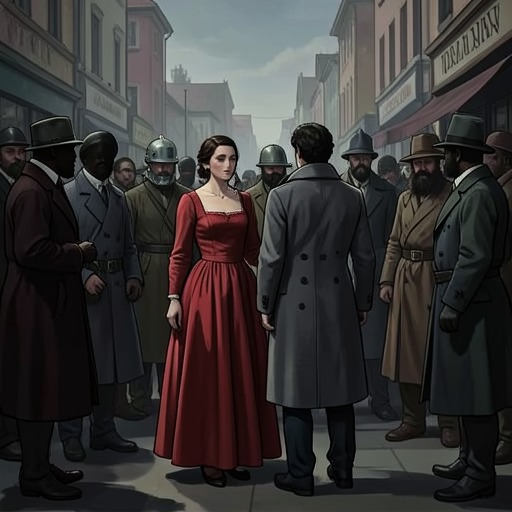
In June, Guillermo presented Rafael’s card at a Madrid police station to exchange papers issued in the Republican zone for documents recognized by the Nationalist authorities. The guard’s manner changed as soon as he inspected it and directed Guillermo to the appropriate counter for exchanging documents. In the crowded office, people who had endured the city’s shortages and bombardment waited in the first six lines; Guillermo stood apart in the line for those whose papers appeared acceptable. He submitted the card with a composed smile, concealing the turmoil the sight of his defeated fellow citizens provoked in him.
The card’s success depended on the same administrative logic that made identity dangerous: officials acted on the document’s apparent validity, not on the life behind it. A Republican-era fabrication, prepared with enough care to pass as authentic, became a bridge into the paperwork of the victorious regime. The papers did not erase Guillermo’s past, but let him move through a system that could classify, question, and expose him.
Reuse and Significance
The Rafael Cuesta Sánchez identity also belongs to a wider pattern of postwar documentary evasion in the novel. At Galileo 14, Clara Stauffer’s network arranged papers for fugitives, including false baptismal records bearing German names. Jan Schmitt likewise acquired the identity Johannes Grunwald through a fabricated residence certificate, which enabled him to apply for a municipal police position in Schöneberg and disappear into an official uniform. These cases are not identical to Rafael’s papers, but they echo their central mechanism: an invented record can redirect the scrutiny of institutions and make a concealed past difficult to recover.
Rafael Cuesta Sánchez’s false identity papers therefore connect personal survival to the power of records. Their changing particulars show that identity in this world can be assembled, revised, and transferred through administrative detail. Yet the card’s usefulness remains precarious: it offers protection only so long as officials accept its surface, and Guillermo’s hidden family history travels with him beyond what the document can say.